

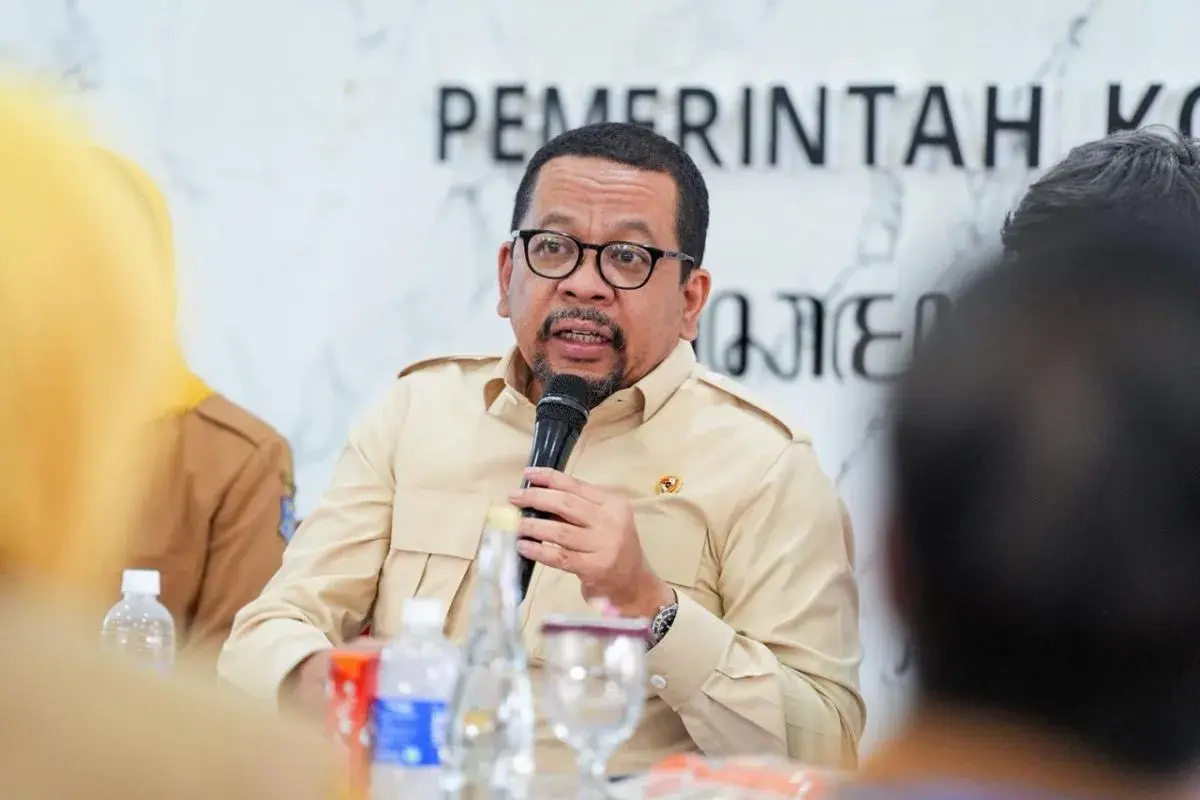
inp.polri.go.id - Jakarta. The Head of the Indonesian Government Communications Agency (Bakom), Muhammad Qodari, believes that digitalizing social protection (perlinsos) is key to ensuring fair distribution of social assistance to the public.
"We came to Surabaya to directly observe President Prabowo's strategic program, the Digitalization of Social Assistance. This program aims to ensure that the enormous social protection budget reaches its intended target accurately and fairly," Qodari said in an official statement in Jakarta on Wednesday (7/29/2026).
Qodari, who personally observed the implementation of the Digitalization of Social Protection program in Tambaksari District, Surabaya, on Tuesday (7/28/2026), stated that the large social protection budget, which reaches approximately IDR 1,300 trillion, or nearly 30 percent of the state budget, must be accompanied by a system capable of ensuring equitable distribution of aid to all citizens.
According to him, digitalizing social protection is a crucial step for the government to improve the governance of aid distribution through the use of technology and data integration across ministries and institutions.
Qodari explained that the distribution of social assistance has faced challenges, including the registration of ineligible residents as recipients, while some eligible residents remain unregistered.
Therefore, he hopes that digitalization can ensure that the data collection and determination of aid recipients are based on objective data, ensuring that aid reaches those truly deserving.
As of July 28, 2026, Surabaya City was the region with the highest data collection rate, reaching 99.82 percent of the total 1,001,688 heads of families (KK).
Qodari expressed his appreciation for the collaboration between various regional agencies, which he said made the data collection process fast and effective.
The data collection revealed that approximately 25,000 families were not actually eligible for social assistance, and approximately 51,000 new families were eligible.
"Imagine, there are approximately 51,000 families who should have received social assistance but didn't. Today, they are receiving justice through the digitalization of social protection," he said.
(ad/inp/pr/rs)