

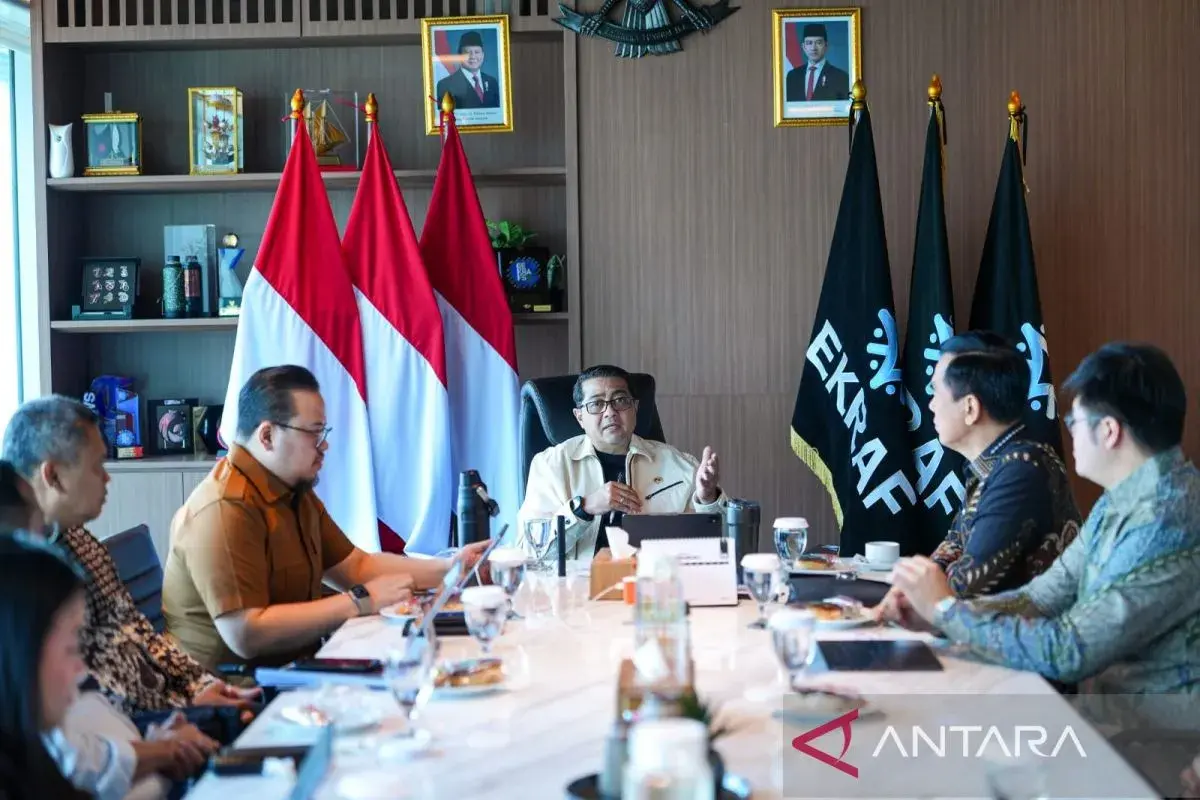
inp.polri.go.id - Jakarta. Creative Economy Minister Teuku Riefky Harsya is promoting the implementation of modular cinemas (micro-cinemas) to expand national film distribution while creating new growth opportunities for the creative economy.
Riefky welcomed the innovation and collaboration from PT Indobox Cinematic Buana (Indobox Cinema), which he hopes will provide a solution that can expand access to film distribution while simultaneously stimulating the creative economy in the regions.
"This is in line with Indobox Cinema, which recognizes that creative economy resources are widely distributed, so that people in various regions have equal opportunities to enjoy the works of Indonesian filmmakers," Riefky said in a statement received in Jakarta on Sunday (7/26/2026).
According to Riefky, the presence of modular cinemas not only serves as a screening space but also serves as a hub for creative economic activity, opening up opportunities for collaboration involving local business actors, communities, and creative talents across various regions.
This solution is also considered to address the problem of 74 percent of regencies/cities in Indonesia that do not yet have cinemas. Riefky stated that the collaboration with Indobox Cinema offers significant potential for increasing added value and downstreaming the film subsector.
"As access to national films expands, opportunities for filmmakers, creative economy activists, creative communities, and investors can grow more holistically together, strengthening the spirit of Indobox Cinema," said Riefky.
Micro-cinemas are designed with more efficient investment, shorter construction times, and more affordable ticket prices. This investment model aims to address the gap in cinema access, given that only 26 percent of regencies/cities in Indonesia have cinemas, with around 70 percent of these concentrated on the island of Java.
Budi Yulianto, President Commissioner of PT Indobox Cinematic Buana, stated that the modular cinema concept could be a solution that provides quality entertainment, expands the distribution of Indonesian films, and creates a multiplier effect that increases employment opportunities for the surrounding community.
The Ministry of Creative Economy is ready to bridge communication with local governments to utilize under-utilized public assets or land as locations for modular cinema units.
This collaboration is also believed to be able to provide an official distribution channel for community-based independent films, documentaries, and regional films, building a more inclusive, innovative, and competitive film ecosystem.
(ad/inp/pr/rs)