

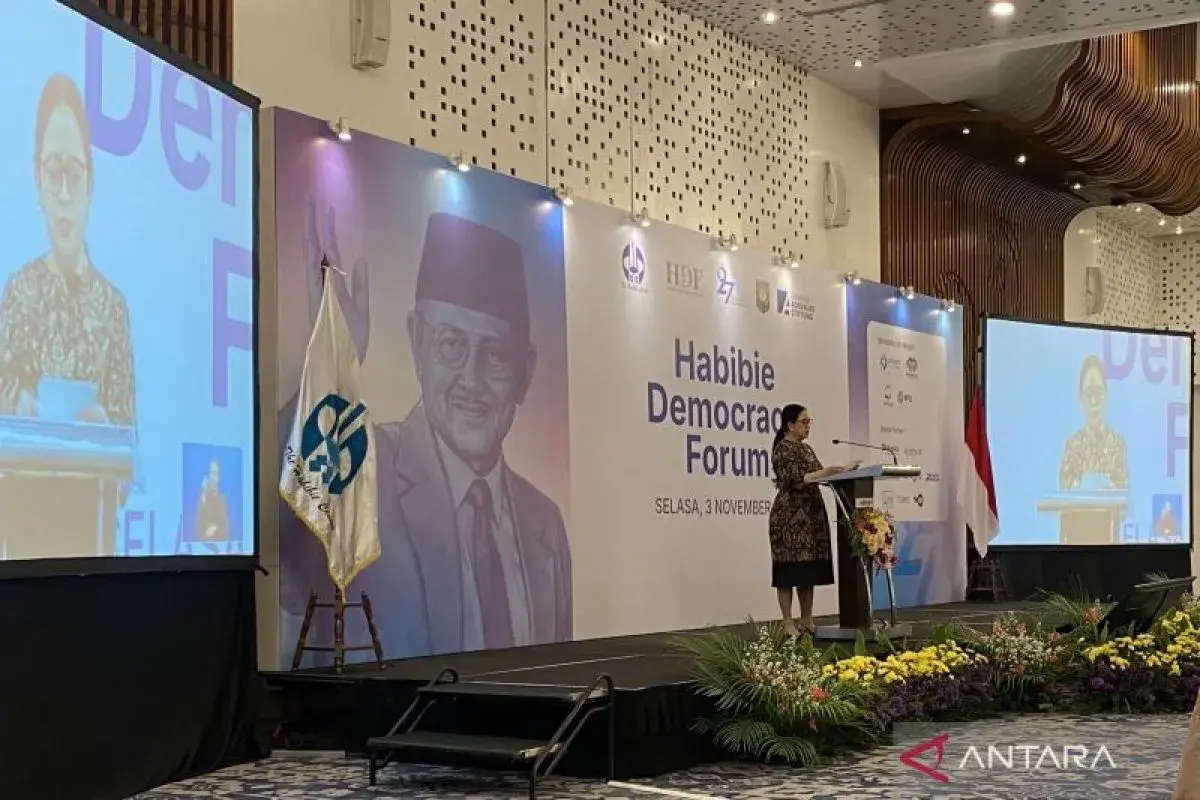
inp.polri.go.id - Jakarta. House Speaker Puan Maharani emphasized the importance of transformative leadership growing across all state institutions to promote governance oriented toward the interests of the country and the welfare of the people.
Puan made this statement in her national address at the Habibie Democracy Forum 2026 in Jakarta on Tuesday (11/3/2026), which raised the theme "Transformative Leadership for an Inclusive, Resilient, and Sustainable Democracy."
"Transformative leadership must grow across all state institutions as a key agenda to strengthen and sharpen ways of thinking and working that further prioritize state governance that is oriented toward the interests of the country," she said.
She stated that Indonesia's current leadership challenges can be seen at three levels: structural challenges to the country, challenges to governance, and challenges to building the future of the nation and state.
To address these challenges, meaningful collective transformation is necessary. Transformation, Puan stated, cannot simply be achieved through policy changes or leadership changes; it must be accompanied by changes in mindset and work methods.
She also cautioned that understanding the importance of good governance does not automatically translate into effective change. Therefore, a shared vision and enthusiasm from all elements of the nation are needed to improve national governance.
"We need a shared vision and shared enthusiasm to improve this country. Because if we don't work together, it will all be for nothing. Building a country can't be done alone; it must be done together," she continued.
Furthermore, Puan stated that each party needs to take steps for change according to their respective responsibilities and authorities, without having to wait for ideal conditions or for others to initiate.
Transformative leadership can indeed pave the way for shared change. However, national progress requires collective strength to act together.
"The people, civil society, the business world, intellectuals, all components of the nation, and state institutions must take responsibility according to their roles," Puan said.
(ad/inp/pr/rs)