

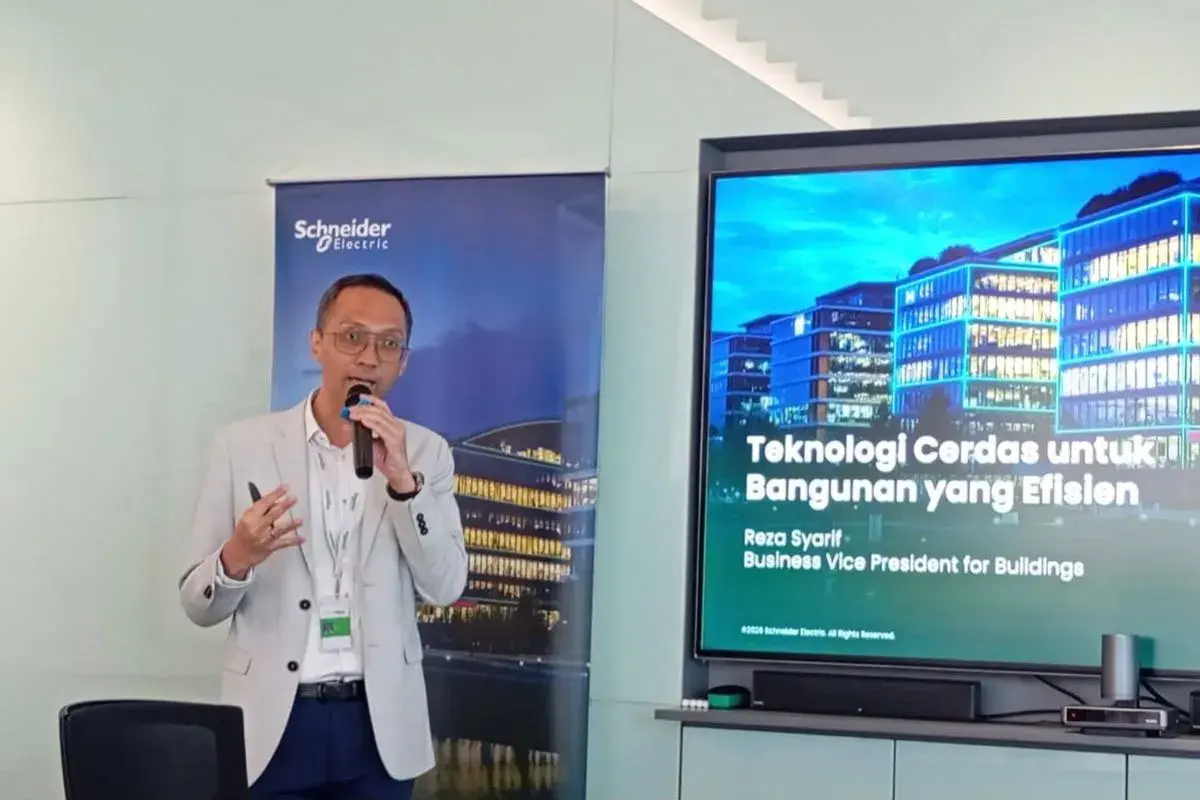
inp.polri.go.id - Jakarta. Digitalizing building management is considered a solution to reduce energy consumption and increase operational efficiency amidst the increasing electricity demand in the building sector.
The implementation of a digital-based energy management system even has the potential to reduce electricity consumption by up to 15 percent if implemented gradually.
Reza Syarif, Business Vice President for Buildings at Schneider Electric Indonesia, stated that the building sector is one of the largest contributors to energy consumption and carbon emissions, so increasing efficiency in this sector can have a significant impact on reducing emissions and operational costs.
"Energy efficiency is not just about reducing electricity consumption, but ensuring energy is used appropriately without sacrificing reliability, safety, and user comfort," Reza said in Jakarta on Tuesday (7/28/2026).
He explained that around 30 percent of energy in buildings is still wasted due to suboptimal management. According to him, the implementation of a Building Management System (BMS) or Building Automation System (BAS) allows managers to monitor energy consumption in real time, detect waste, and optimize electricity use according to actual needs.
Reza added that digitalization can be applied not only to new buildings. Existing buildings can also undergo gradual transformation through energy audits to determine priority areas without having to replace the entire infrastructure at once.
In addition to technology investment, human resource readiness is also a crucial factor because digital-based building management requires a shift in work patterns toward data-driven decision-making.
The system has been implemented at the SMC Telogorejo Hospital in Semarang. Rio Oktavianus, Facility Manager of the SMC Telogorejo Hospital, stated that the hospital has successfully reduced electricity consumption by around 5 percent in 2025 compared to 2024 after the full implementation of the BMS, with a target efficiency of 10-15 percent annually.
According to Rio, the digital system allows real-time monitoring of utilities such as HVAC, electricity, UPS, and air quality, allowing for early detection of potential disruptions. In addition to saving energy, the system also supports predictive maintenance, which improves the hospital's operational reliability.
(ad/inp/pr/rs)