

inp.polri.go.id - Jakarta. The Ministry of Primary and Secondary Education is ready to prioritize the budget for the revitalization program for educational units to develop Early Childhood Education (PAUD) infrastructure to support the 13-year compulsory education program.
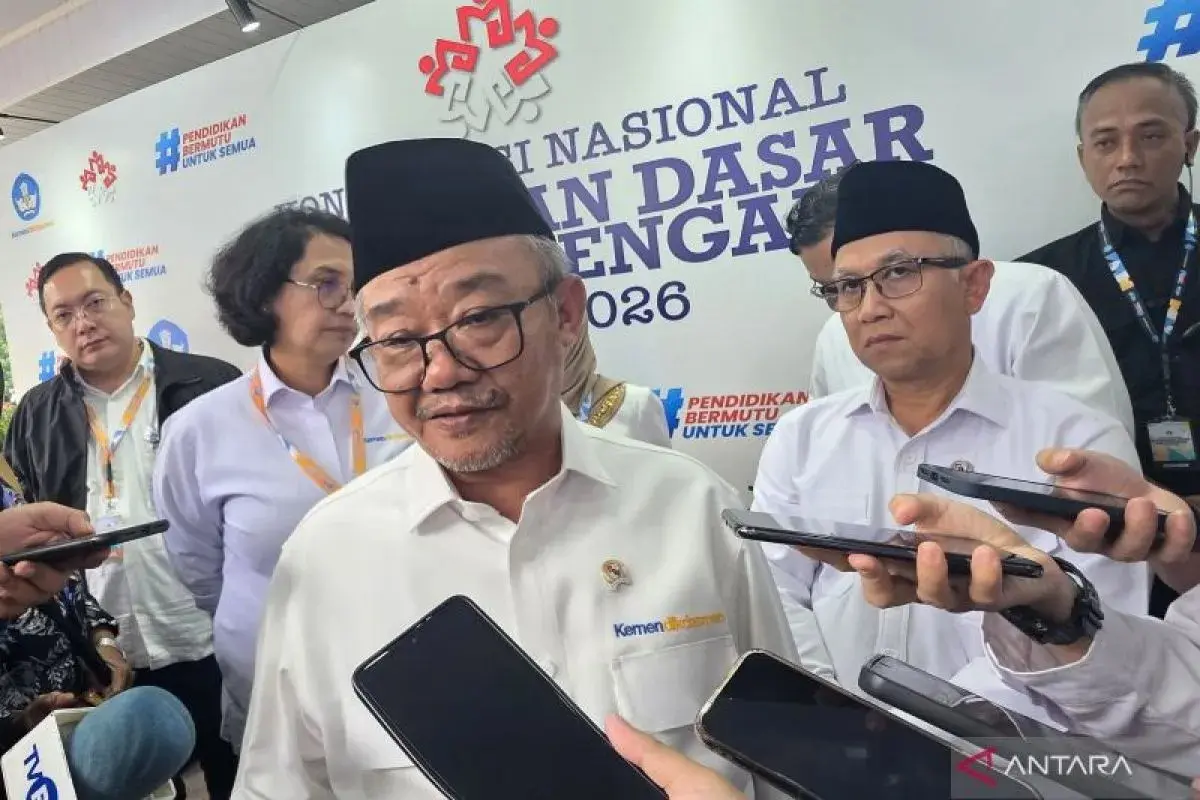
Minister of Primary and Secondary Education, Abdul Mu'ti, stated that his ministry will gradually build at least one kindergarten per village to ensure the implementation of one year of compulsory preschool education.
"Specifically to strengthen the 13-year compulsory education program, we will gradually strive to build at least one kindergarten per village," said Abdul on Tuesday (2/10/2026).
The budget to supplement the availability of PAUD infrastructure will be taken from the 2026 budget allocation for the educational unit revitalization program.
Of the total 2026 educational unit revitalization budget of IDR 14.06 trillion, the ministry will prioritize the allocation for post-disaster school recovery, revitalization of schools with severe and moderate damage, revitalization and rehabilitation of schools in the 3T (frontier and outermost) regions, and the construction and revitalization of PAUD infrastructure.
"So, the priority for the 2026 revitalization is first, schools in disaster areas. Second, schools with severe and moderate damage, then education in the 3T (frontier and outermost) regions, and then for early childhood education," explained the Minister of Primary and Secondary Education.
In addition to increasing the number of PAUD units, the ministry is also ready to distribute educational assistance funds from the Smart Indonesia Program (PIP) for PAUD students in May.
Abdul Mu’ti explained that his office is currently in the process of verifying and validating the data of students who will receive PIP PAUD this year, both existing and new students, for the 2026/2027 academic year.
"For this year, of course, disbursements will begin around May or June. The verification and validation process is currently underway," said the Minister.
The PIP PAUD recipients are proposed based on the National Single Social and Economic Database (DTSEN) of low-income groups and then submitted to schools.
Each PAUD student deemed eligible for PIP will receive an education assistance fund of Rp 450,000 per year, which will be transferred directly to the recipient's registered bank account.
(ad/inp/pr/rs)