
inp.polri.go.id - Jakarta. Coordinating Minister for Food Affairs Zulkifli Hasan (Zulhas) stated that waste sorting at source is key to effective waste management, including the development of Waste-to-Electricity (PSEL) facilities.
He stated that waste processing technology will not operate optimally without changing people's habit of separating waste at home.
"Waste sorting is no longer an option, but a necessity. If waste is sorted at home, organic waste can be used as compost or animal feed, while inorganic waste can be recycled or processed into energy," said Zulhas on Wednesday (7/8/2026).
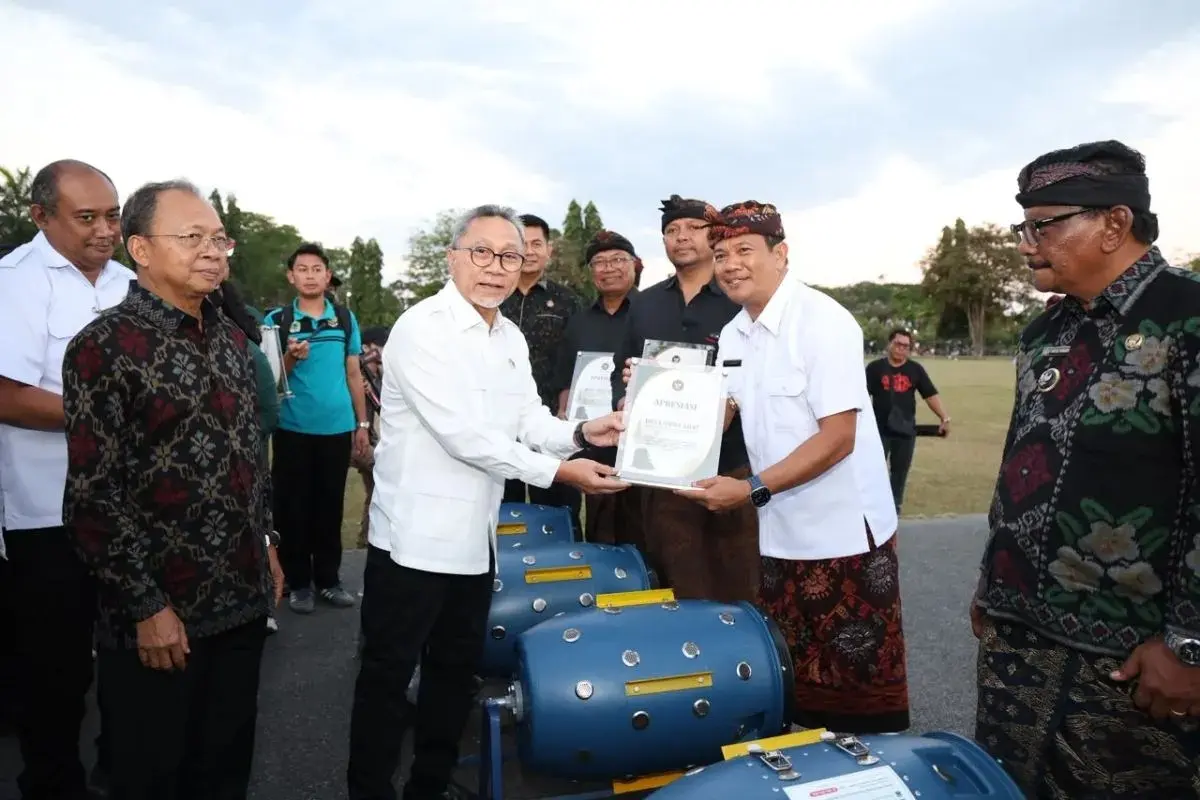
He made this statement while leading the Declaration of the Bali Waste Sorting Movement during the Bali Waste Sorting Alert Roll Call at Puputan Margarana Field, Denpasar, Bali. The movement is part of support for the ASRI (Safe, Healthy, Clean, and Beautiful) National Movement.
Zulhas stated that waste sorting at source is a crucial foundation for strengthening upstream waste management, including supporting the development of PSEL in Bali.
According to him, the government continues to push for accelerated resolution of the waste problem in Bali, including the management of the Suwung Landfill and the development of the Waste Management and Sewage Treatment (PSEL) facility.
The Bali Provincial Government previously recorded that the province's waste volume reached approximately 3,400 tons per day, with the largest contributor coming from Denpasar City, at approximately 1,000 tons per day.
The government is targeting the Greater Denpasar PSEL facility, with a processing capacity of approximately 1,200 tons of waste per day, to be operational by 2027 as an effort to reduce waste generation and generate energy.
Zulahs emphasized that the successful utilization of waste management infrastructure is supported by active community participation through the habit of sorting waste at home. "This is the key to effective waste management," he said.
He commended the Bali Provincial Government for issuing a Gubernatorial Regulation to encourage waste sorting at source.
However, Zulhas assessed that the implementation of this policy still requires ongoing monitoring and guidance to ensure the community consistently implements waste sorting.
(ad/ndt/pr/rs)