
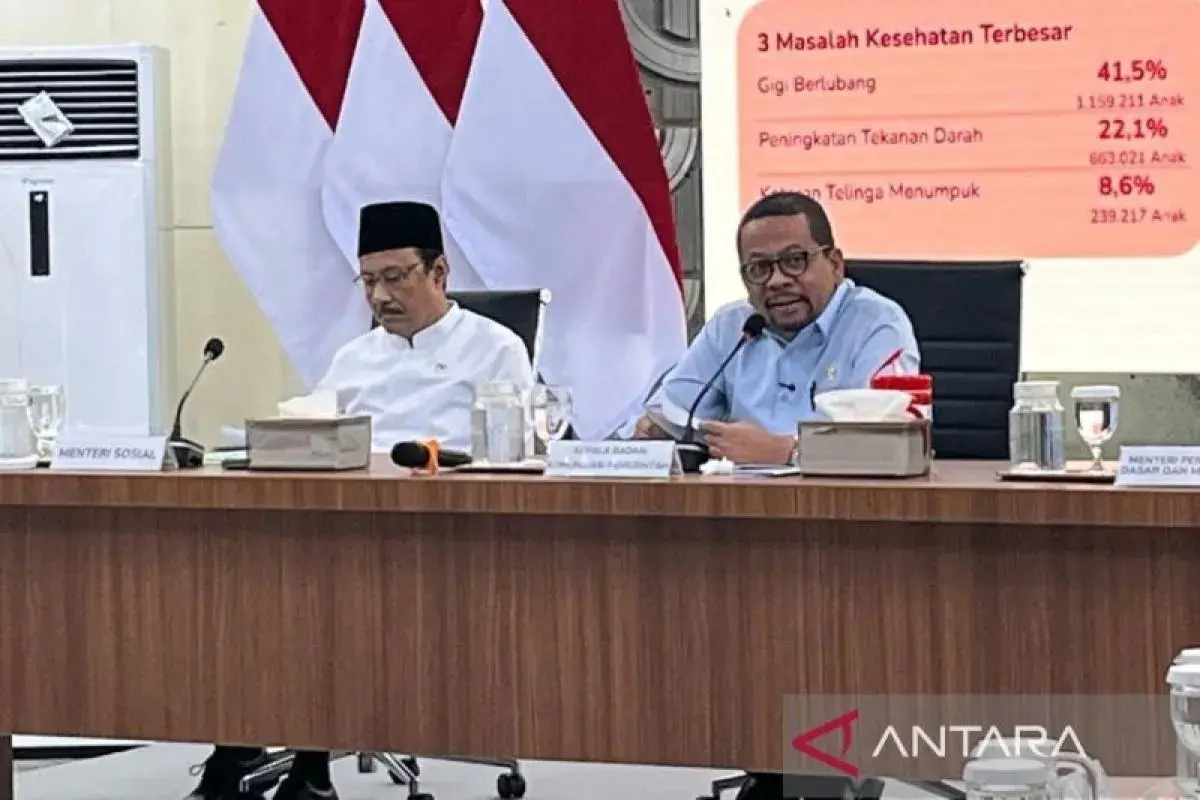
inp.polri.go.id - Jakarta. The Head of the Government Communications Agency (Bakom), Muhammad Qodari, stated that by May 2026, 100 million Indonesians have undergone the Free Health Check (CKG) program.
"A total of 100 million Indonesians have received the CKG," said Qodari, Wednesday (5/6/2026).
He explained that throughout 2025, the program served more than 70 million participants, and between early 2026 and early May, the number increased by more than 30 million, bringing the total number of people who have benefited from this service to 100 million.
The program is being implemented in more than 10,000 community health centers (Puskesmas) across 514 regencies/cities across Indonesia. Qodari stated that this number represents only about a third of Indonesia's total population of nearly 290 million.
Therefore, the government is continuing the program to expand the reach of health check-up services to the public.
Specifically for the school-age group, the Ministry of Health recorded that 4.8 million children underwent health screenings at 48,000 schools between January 1 and May 3, 2026.
The results revealed that 41 percent, or approximately 1.1 million children, had cavities, 22.1 percent, or 663,000 children, had high blood pressure, and 8.6 percent, or 239,000 children, had earwax buildup.
"I'm personally frankly surprised. High blood pressure is now affecting schoolchildren. If there weren't CKGs, I wouldn't have known about this. This means a more in-depth analysis is needed. Why are our children experiencing high blood pressure? If this high blood pressure persists, it can lead to heart problems," explained Qodari.
He further stated that of the total participants who underwent screening, approximately 16.8 million people required follow-up treatment, with 1.4 million of them having received further treatment.
Adults aged 18 to 59 years dominated, accounting for 60 percent, followed by school-aged children aged 7 to 18 years old at 16 percent.
Qodari stated that the CKG program was introduced to ensure early detection of various health problems, particularly in school-aged children, so that treatment can be initiated more quickly.
This examination is also a government effort to reach communities that lack access or awareness of routine health check-ups.
(ad/inp/pr/rs)