

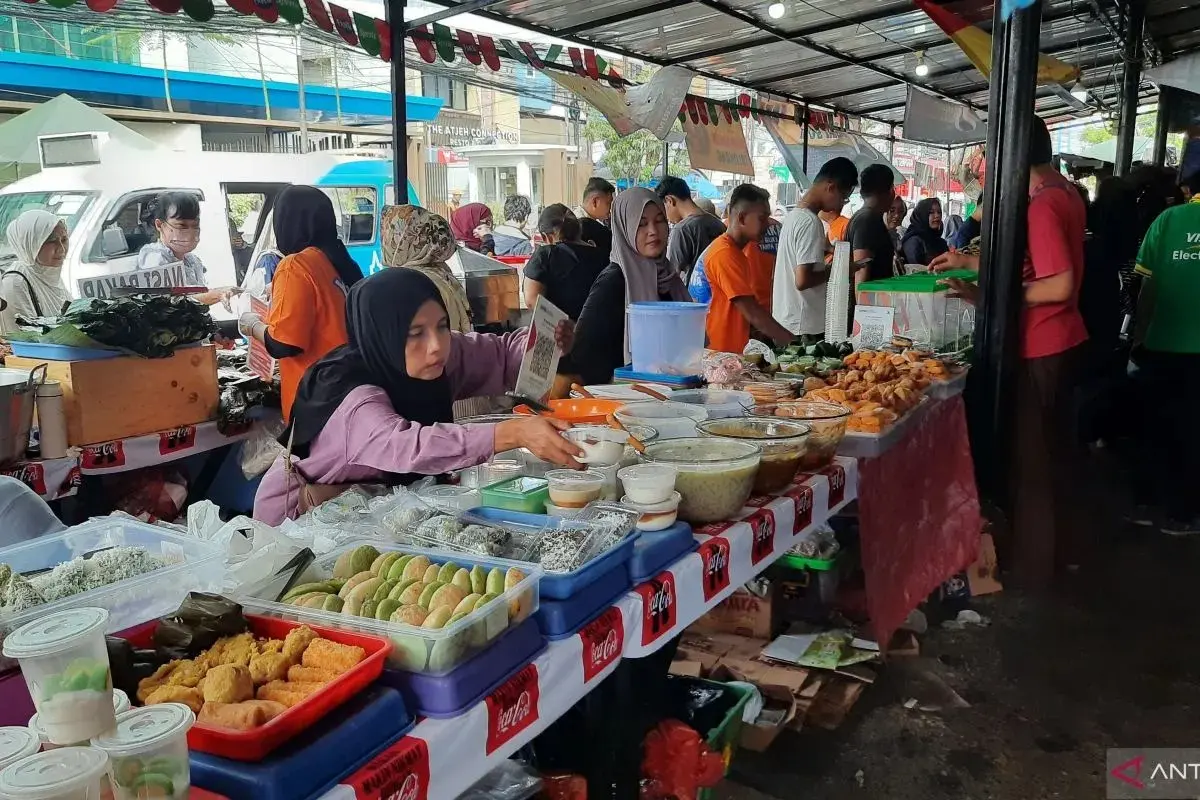
inp.polri.go.id - Jakarta. The Jakarta Food and Drug Monitoring Agency (BPOM) is monitoring snack stalls in five areas of Jakarta during Ramadan 1447 Hijri/2026.
"We have planned one team for each area in monitoring the snack stalls, such as West Jakarta is on Jalan Panjang, North Jakarta is in Koja, and South Jakarta is in Karet. On the other hand, there is an exception for Central Jakarta, where there are two locations: Bendungan Hilir and Kemayoran," said Sofiyani Chandrawati, Head of the Jakarta BPOM, on Friday (2/27/2026).
She explained that the locations being monitored are snack stall centers in each area, one of which is the Bendungan Hilir Takjil Center.
If snack food is found to contain hazardous substances, such as formaldehyde or textile dyes, the Jakarta BPOM will immediately confiscate the food and trace its distribution chain.
"The principle is to break the distribution chain. Here (in Bendungan Hilir), we take them out of the display cases first. We provide education on choosing safe products, and we also conduct further investigations into the location of the producers," explained Sofiyani.
Furthermore, if the producers are found to be from outside Jakarta, such as Tangerang and Bogor, the Jakarta Food and Drug Monitoring Agency (BPOM) will coordinate with the local Technical Implementation Unit (UPT).
"In 2024, a tofu producer was investigated by law enforcement since they still violated the regulations although we have provided guidance and sanctions," said Sofiyani.
Meanwhile, based on monitoring data from snack centers and modern retailers in 2025, the Jakarta Food and Drug Monitoring Agency tested 147 samples. The results showed that six samples, or 4.1 percent, did not meet the required standards, while the remaining 141 samples (95.9 percent) met the requirements for consumption.
(ad/ndt/pr/rs)