
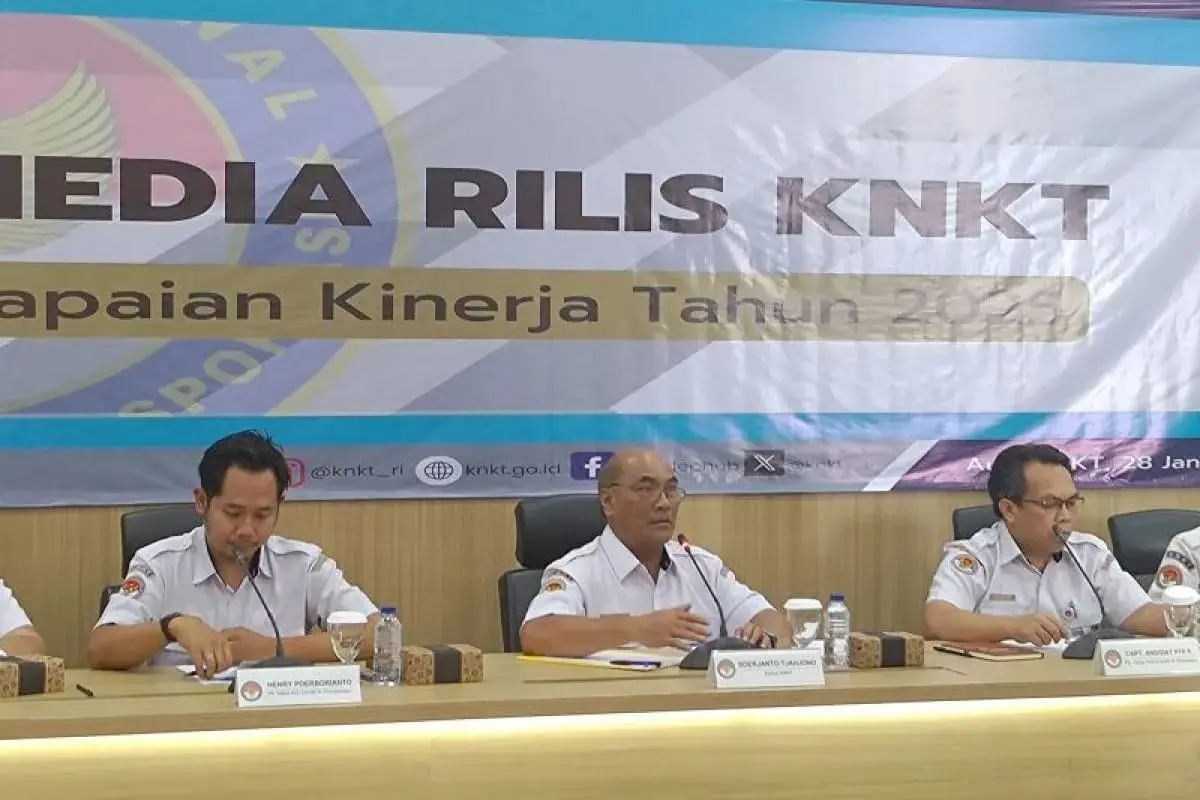
inp.polri.go.id - Jakarta. The National Transportation Safety Committee (KNKT) noted that human factors remained the dominant cause of cross-modal transportation accidents investigated throughout 2025.
KNKT Chairman Soerjanto Tjahjono stated that these findings were consistent across road, shipping, and aviation accidents, although the risk characteristics differed across modes.
"In many cases, human factors remain the largest contributor, whether related to fatigue, negligence, or non-compliance with safety procedures," stated Soerjanto on Wednesday (1/28/2026).
In land transportation, the KNKT investigated nine accidents throughout 2025, resulting in 69 injuries.
The KNKT noted that braking system failure, commonly known as 'brake failure,' remains a recurring pattern in public and freight vehicle accidents.
Furthermore, monitoring of vehicle condition and compliance with safety administration, including periodic vehicle roadworthiness tests, was deemed suboptimal.
KNKT Traffic and Road Transportation Investigator Dwi Bakti Permana explained that many road accidents involve vehicles that are technically broken.
"We found vehicles that failed periodic inspections, and some even had test-passing documents whose authenticity was questionable," said Investigator Dwi.
In the shipping sector, the KNKT recorded eight accident investigations throughout 2025, with the majority categorized as serious accidents, including ship sinkings and fires.
Issues of overloading or overdrafting vessels and poor passenger registration on manifests remain recurring findings in shipping investigations.
Issues of overloading, or overdrafts, and poor passenger registration on manifests remain recurring findings in shipping investigations.
Acting Chair of the Maritime Accident Investigation Subcommittee, Capt. Anggiat PTP Pandiangan, stated that these conditions increase the risk of accidents, especially when ships encounter bad weather.
Meanwhile, in aviation, KNKT recorded 19 investigations in 2025, consisting of 9 accidents and 10 serious incidents, with the most common incident involving aircraft overshooting the runway, or runway excursions, where aircraft are unable to stop on the runway.
The KNKT also identified flight crew fatigue and suboptimal implementation of operational procedures as safety issues that still need improvement.
Overall, from 2015 to 2025, the KNKT issued at least 1,481 safety recommendations across modes of transportation, with the largest portion focused on control and oversight.
The KNKT emphasized that all recommendations were aimed at preventing similar accidents from recurring, not at finding fault with any particular party.
(ad/ndt/pr/rs)