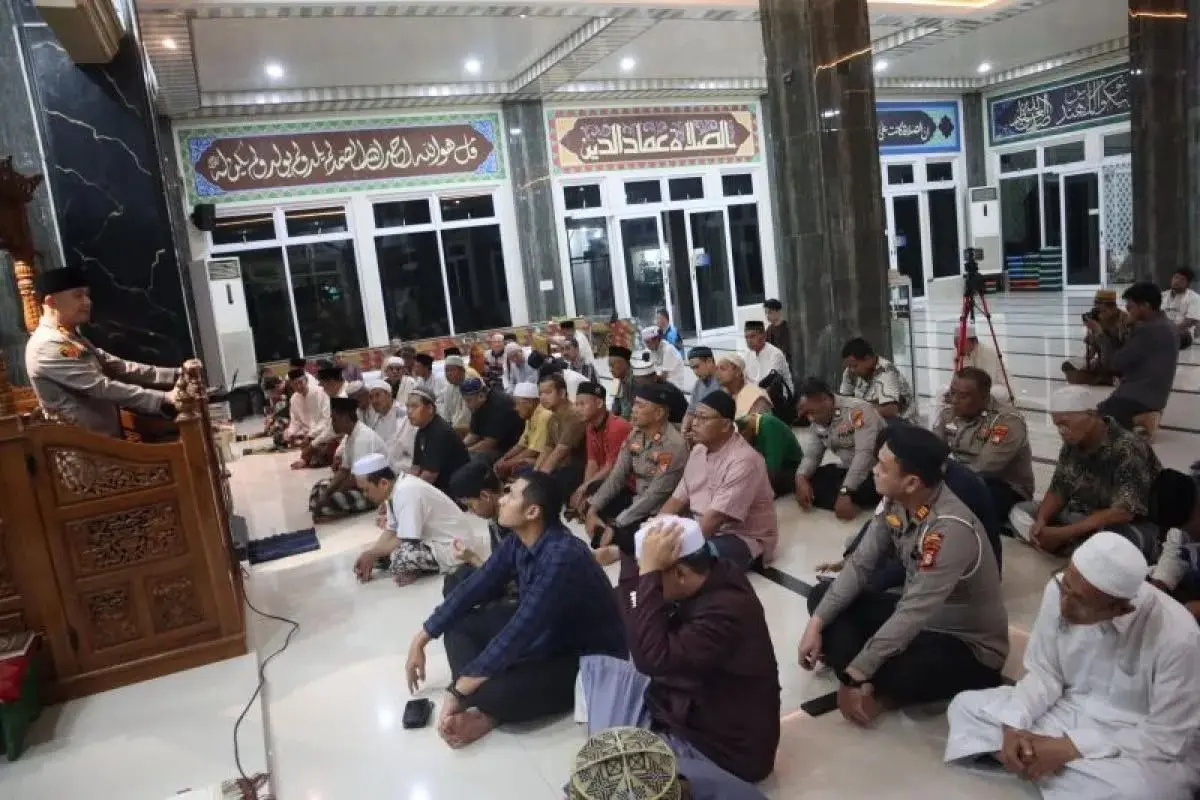


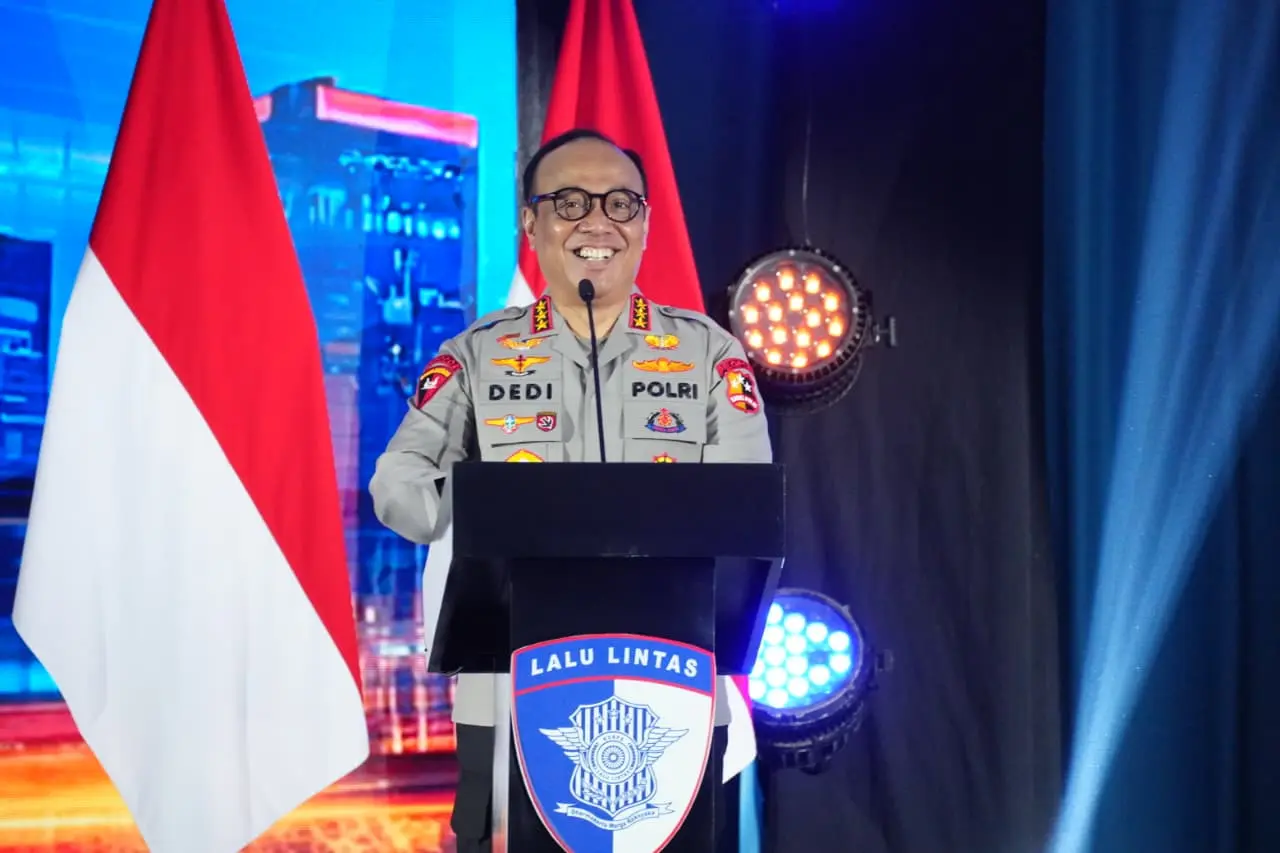
inp.polri.go.id - Jakarta. Vice Chief of the Indonesian National Police (INP), Commissioner General Dedi Prasetyo, emphasized their commitment to improving public services through digital transformation and technological innovation at the Traffic Function Technical Working Meeting for the 2026 Fiscal Year, held at the Mutiara Auditorium, PTIK, South Jakarta, on Friday (5/22/2026).
In his remarks, Dedi stated that the 2026 meeting was part of the implementation of the policy direction of the police leadership and a follow-up to recommendations for accelerating INP reform, particularly in improving the quality of public service.
"The 2026 Traffic Corps Technical Working Meeting demonstrates the Chief of Traffic Corps' commitment to explaining the policy direction of the INP leadership. This is also part of the follow-up to the recommendations of the Commission for the Acceleration of National Police Reform," said Dedi.
On this occasion, the INP Traffic Corps launched several new digital services to facilitate access to public services quickly, transparently, and accountably.
One of the innovations introduced is the Digital Driving License (SIM) and the STNK (Vehicle Registration Certificate) and BPKB (Vehicle Ownership Certificate) renewal services, which have been well-prepared by the Traffic Corps.
"The goal is to simplify the public service process, make it accountable, and of course, easily accessible to the public through this digitalized system," said Dedi.
He explained that the digital system has integrated various traffic police services, from SIM services and STNK renewals to BPKB services, into one integrated service platform.
Furthermore, the 2026 Traffic Function Working Meeting also served as the launch of the E-TLE Drone Mobile, which has the ability to dynamically detect traffic violations through aerial surveillance technology and facial recognition.
"The E-TLE Drone Mobile can also capture facial recognition. So, it can be combined with vehicle identification and integrated directly with existing data systems. Furthermore, to avoid errors in traffic enforcement, verification can be achieved using facial recognition. This is an extraordinary step," explained Dedi.
(ad/inp/pr/rs)