
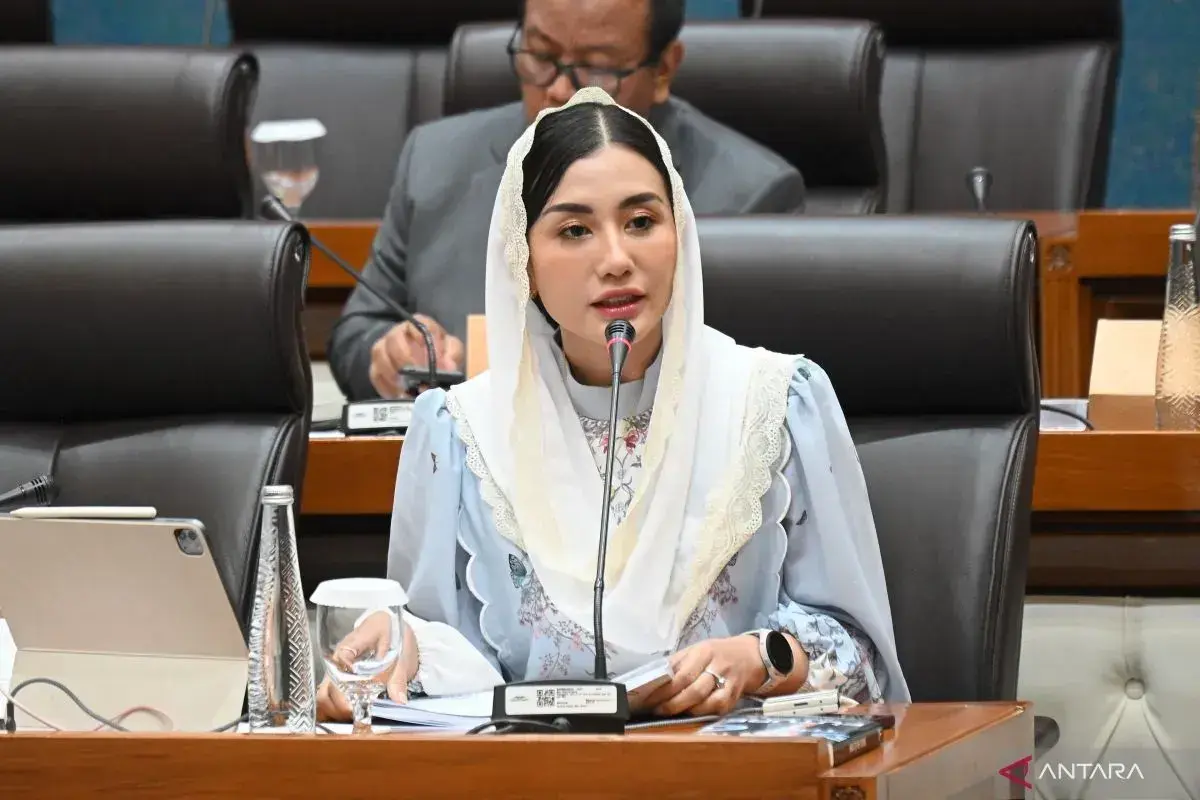
inp.polri.go.id - Jakarta. Member of Commission VII of the Indonesian House of Representatives (DPR), Novita Hardini, saw that nickel mining in Raja Ampat, Southwest Papua, have violated regulations and threaten one of the world's largest biological riches that has been Indonesia's mainstay in the tourism and conservation sectors.
"Raja Ampat is just an area. This is one of the world's marine biodiversity paradises that has been recognized by UNESCO as a Global Geopark. This area is not a place that can be compromised for mining activities. We cannot harm this area just to pursue nickel downstreaming," said Novita in her statement, quoted from Antaranews in Jakarta, Wednesday (6/4/2025).
Raja Ampat consists of more than 610 islands with waters that are home to 75 percent of the world's marine species, including 540 types of coral and more than 1,500 species of fish. However, a number of small islands in the area have now been acquired by nickel Mining Business Permits (IUP) and some are already actively mined.
"Law Number 1 of 2014 concerning Management of Coastal Areas and Small Islands clearly states that the utilization of small islands is prioritized for tourism, conservation, marine cultivation, and research. There is not a single article that legalizes mining exploration in the area," she explained.
Furthermore, Novita said that data from the Raja Ampat Regency Tourism Office, the tourism sector in 2024 contributed IDR 150 billion per year to the Regional Original Income (PAD), with tourist visits reaching 30,000 people per year, 70 percent of which are foreign tourists.
"If environmental damage due to mining continues, tourism income could plummet by 60 percent, and that directly threatens the livelihoods of indigenous peoples who depend on tourism and fisheries," she said.
(ad/inp/pr/rs)