

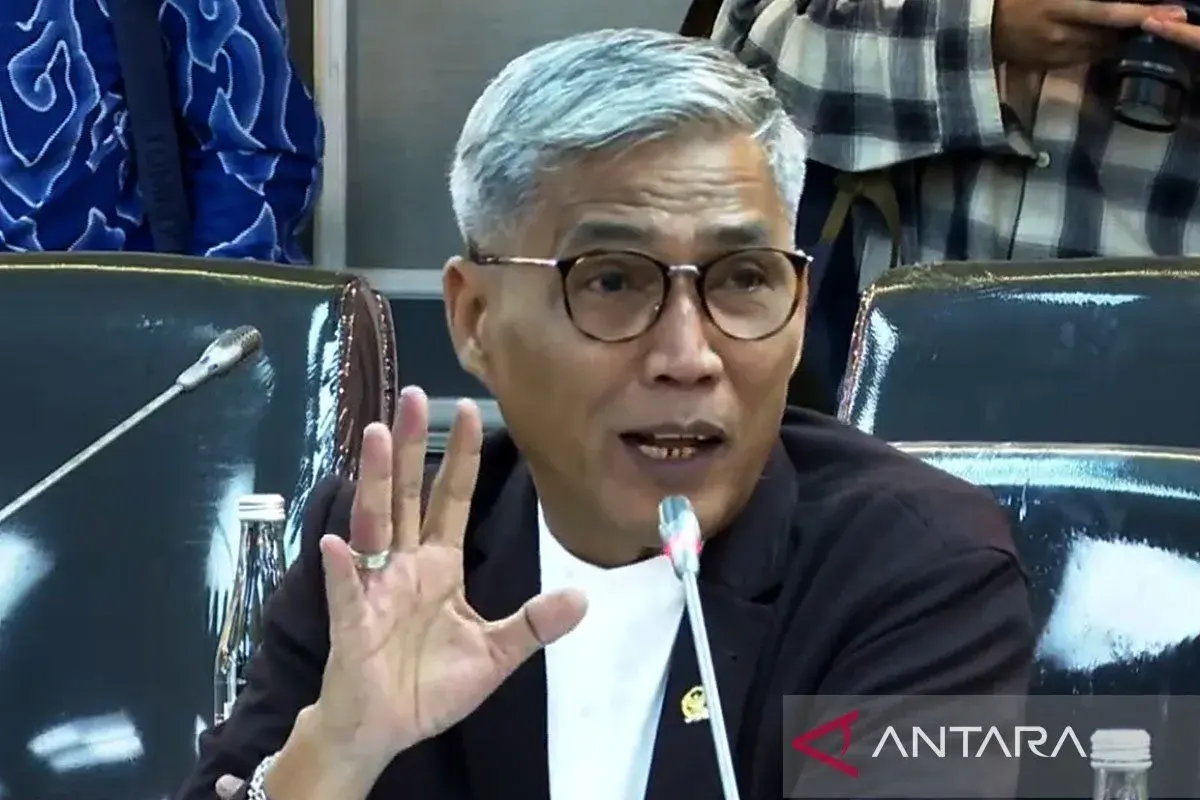
inp.polri.go.id - Jakarta. Mafirion, a member of Commission XIII of the Indonesian House of Representatives (DPR RI), urged the National Commission on Human Rights (Komnas HAM) to immediately draw a conclusion on whether the acid attack on Vice Coordinator of the Commission for Missing Persons (KontraS), Andrie Yunus, is related to human rights violations.
He believes that the acid attack was not just an ordinary crime, but a form of violence that directly violated the victim's basic human rights. He believes this case strongly qualifies as a human rights violation.
"This incident clearly violates the right to live in safety, the right to be free from torture, and the right to self-defense. This is not just a crime, but falls into the category of a human rights violation," Mafirion said in a statement in Jakarta on Monday.
He believes that Komnas HAM must immediately draw a conclusion so that law enforcement can have a strong, human rights-based reference. If Komnas HAM does not act immediately, this case risks being classified as an ordinary crime, rather than a serious human rights violation.
He believes this lack of clarity also has the potential to undermine efforts to uphold justice and protect human rights defenders in Indonesia.
"The National Commission on Human Rights must not hesitate to reach a conclusion immediately in the Andrie Yunus case. This is crucial to ensure the state's presence and seriousness in protecting human rights activists," he said.
Mafirion explained that if this case is not concluded soon, it will have a number of serious impacts, such as weakening the victim's position, as the case will be viewed as a simple criminal case without a comprehensive approach to human rights protection.
Furthermore, it will obscure the motives and intellectual actors, making it difficult to uncover the potential involvement of certain parties, including the possibility of behind-the-scenes actors.
"We are also concerned that if a conclusion is not reached soon, it will create a chilling effect on activists and other human rights defenders, which could hamper their advocacy work. Public trust in the state, particularly in its commitment to upholding human rights, will also decline," he said.
(ad/inp/pr/rs)