
inp.polri.go.id - Jakarta. Transportation observer Djoko Setijowarno proposed that the Indonesian Ministry of Primary and Secondary Education develop a transportation safety curriculum from an early age, following the train accident at East Bekasi Station that claimed dozens of lives.
"It is recommended that the Minister of Primary and Secondary Education create a transportation safety curriculum so that children understand the importance of traffic safety from an early age," Djoko said when contacted in Jakarta on Wednesday (4/29/2026).
Djoko emphasized that the curriculum should incorporate the 3E concept: education, engineering, and law enforcement.
According to him, instilling traffic safety awareness from an early age is crucial so that it becomes a guideline in everyday life.
"Transportation safety is a long-term investment, not just a cost burden," he said.
He also emphasized the importance of collaboration between the Ministry of Primary and Secondary Education, the Ministry of Transportation, and other relevant parties in developing and implementing the curriculum effectively.
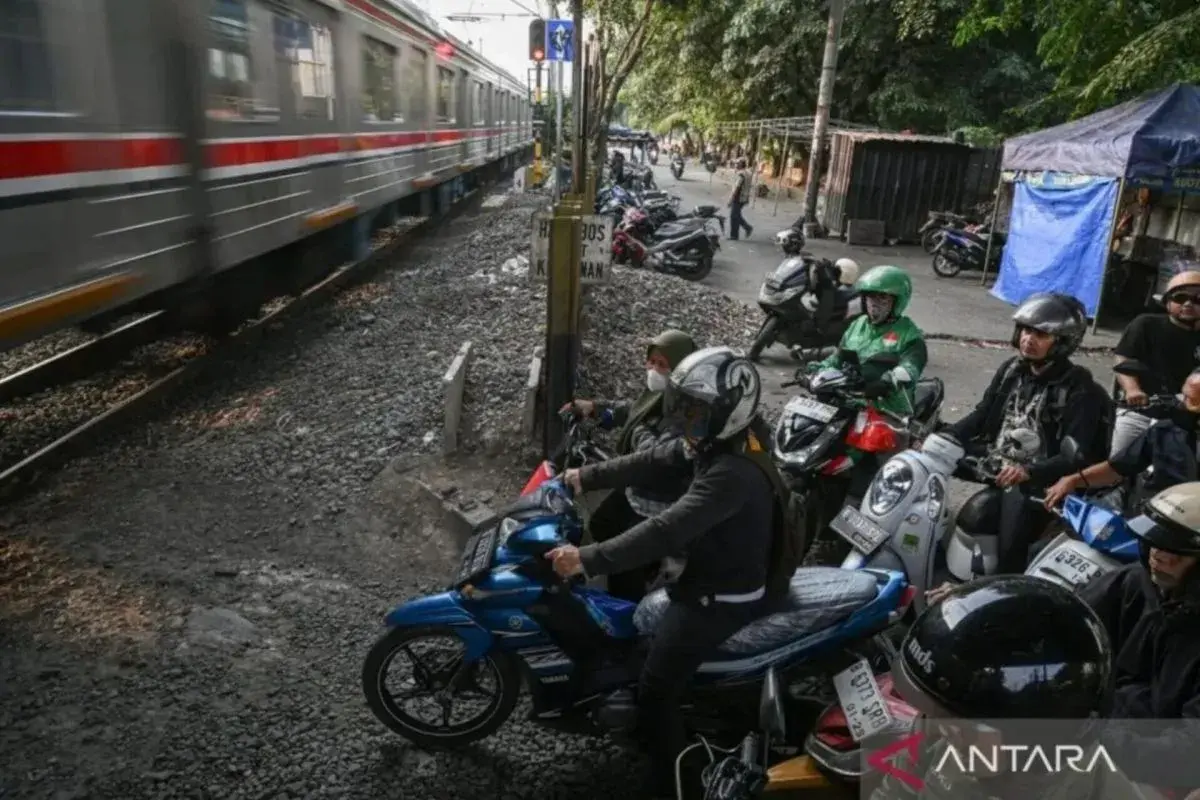
One aspect of the curriculum could be teaching that all road users crossing railroad tracks must give priority to trains.
Djoko then proposed that the curriculum include the issue of level crossing barriers, which are not primary safety devices and traffic signs. Rather, they are merely aids to ensure safe train travel.
"To date, many people have died needlessly due to negligence and indiscipline when crossing railway crossings," he said.
According to data from the Directorate General of Railways, Ministry of Transportation, in 2026, 40 accidents were recorded at level crossings. The majority of incidents (57.5 percent) occurred at level crossings without level crossings, with 23 incidents, while 17 incidents (42.5 percent) occurred at level crossings with level crossings.
The main triggers for these accidents were driver behavior (34 cases), followed by vehicle breakdowns (4 cases), and delays in closing level crossings (3 cases). The impact of these accidents was fatal, claiming 25 lives (61 percent), causing 5 serious injuries (12 percent) and 11 minor injuries (27 percent). The vehicles involved included 22 cars (55 percent) and 18 motorbikes (45 percent).
(ad/inp/pr/rs)